
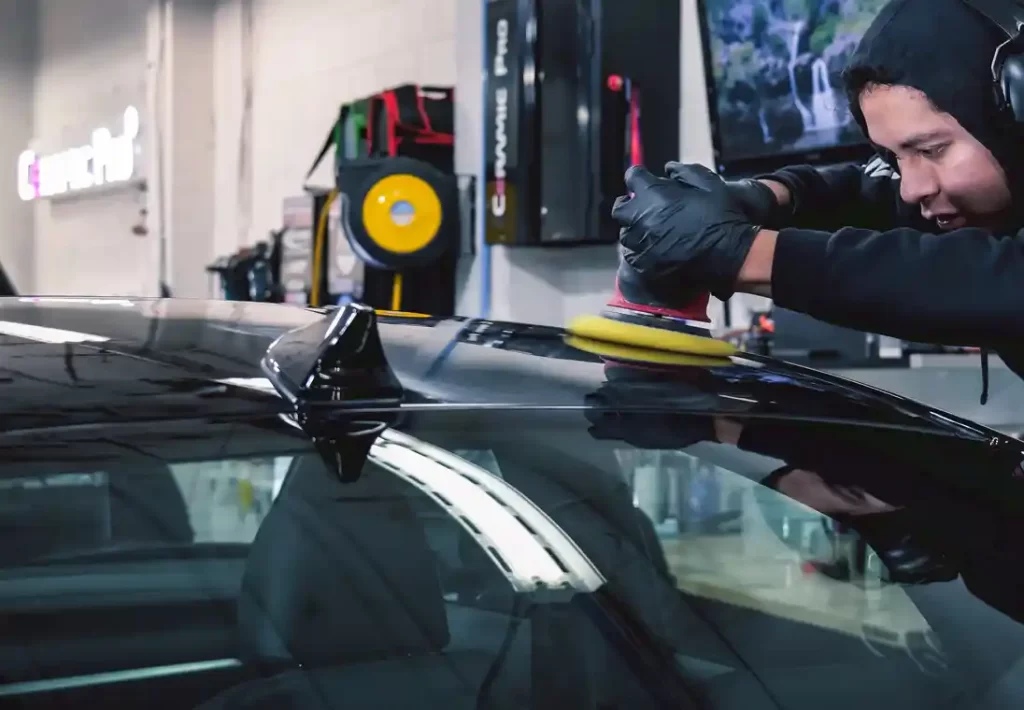
What is paint correction?
Paint correction is a machine-polishing process used to improve gloss and reduce visible defects such as swirl marks, oxidation, haze, light scratches, and wash marring. It is not repainting, and it cannot fix every type of damage.
How do I know if my car needs paint correction?
You may need paint correction if the paint looks dull, hazy, swirled, or scratched under sunlight or shop lighting. Brentwood can inspect the finish and explain what can be improved safely before recommending a correction level.
Will paint correction remove deep scratches?
Paint correction can improve many light-to-moderate defects, but deep scratches that catch a fingernail or cut too far into the clear coat may remain. Some defects need touch-up, refinishing, or realistic expectations rather than more polishing.
What is the difference between polishing and paint correction?
Polishing is the process; paint correction is the controlled use of polishing to reduce defects and improve clarity. A quick polish can add gloss, while correction is more focused on inspecting, measuring, and refining the finish.
Should paint correction come before ceramic coating?
Yes, in many cases. Ceramic coating should be applied over a clean and properly prepared surface. If the paint has defects, correction before coating helps avoid locking in haze, swirls, or oxidation under the protection layer.
How long does paint correction take?
Timing depends on vehicle size, paint hardness, defect level, and the result being targeted. Many vehicles need at least a full day, while heavier correction or larger vehicles can require more time.
How much does paint correction start at Brentwood?
Published paint correction pricing is $700 for compact or sedan vehicles, $800 for mid-size SUV or truck vehicles, and $950 for large SUV, van, or truck vehicles. Final scope depends on inspection and paint condition.
Can paint correction fix oxidation?
Paint correction can improve some oxidation and dullness when the clear coat has enough workable material. Severe oxidation, failing clear coat, or paint damage may not be safely correctable through polishing alone.
Is paint correction safe for older vehicles?
It can be, but older paint needs careful inspection. The team should consider clear coat condition, prior polishing history, repaint areas, and existing damage before deciding how aggressive the correction should be.
How should I maintain paint after correction?
Use safe wash methods, quality towels, regular cleaning, and a suitable protection product. Paint correction improves the finish, but poor washing can quickly reintroduce swirls and marring.